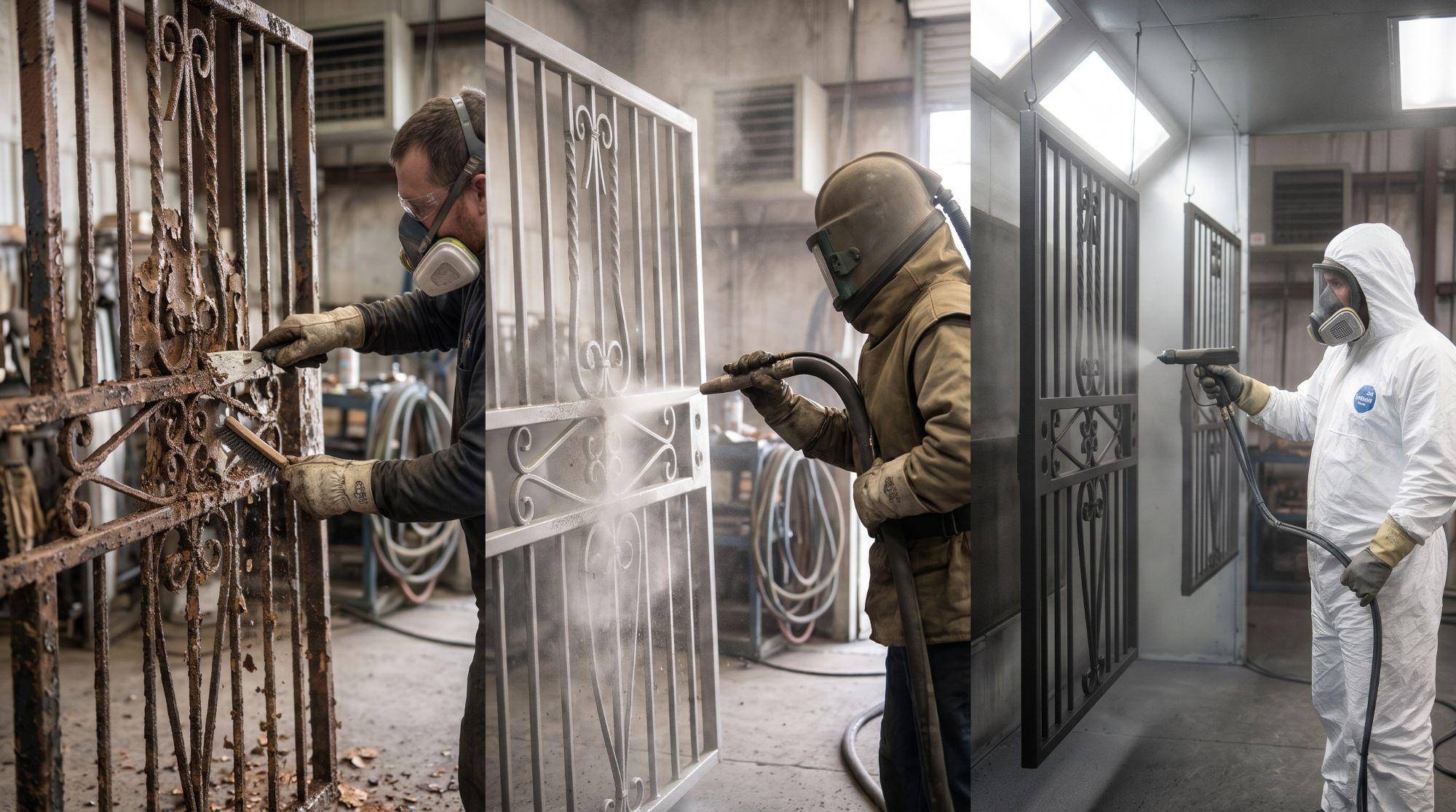
Security gates, sliding driveway gates, burglar bars and palisade fencing are the first line of defence, and the first thing people see, for homes, complexes and industrial parks across Pretoria.
After five to ten years of thunderstorms, sprinklers and high UV, even heavy steel starts to fail. Rust creeps out of weld seams, gate wheels seize and paint peels off the bottom rails.
The usual fix is a wire brush and a tin of hammer-finish paint. Within a year, the rust is back. Here's how to restore gates and fencing properly so they stay rust-free for the next 15 to 20 years.
Why DIY painting fails on gates
- Hidden crevices. Gates are hollow tubing, channel and scrollwork welded together. Water collects inside tubes and along stitch welds where a brush can't reach.
- Wire brushing polishes rust. Brushes and sanding pads don't remove deep pitting; they burnish the top layer and seal moisture and rust underneath.
- Trapped moisture. Enamel brushed over pitted rust traps humidity in the steel. The paint skin acts like a greenhouse and speeds up rust underneath.
Our 5-stage restoration process
- Strip old paint. Immersion stripping or thermal removal takes off 5 to 10 layers of old paint, primer and hammer coat.
- Grit blast. Blasting to SA 2.5 cleans out deep rust pits and weld scale and etches a 40-micron anchor profile.
- Repair welds and check structure. With the paint gone, hidden cracks, broken hinge welds and rotten bottom rails show up and get fixed.
- Zinc-rich primer (optional). For very wet locations, a zinc-rich powder primer adds sacrificial corrosion protection.
- UV-stable polyester coat and bake. Heavy-duty exterior polyester powder, baked at 200 °C for a hard, non-porous finish.
Choosing a colour and texture
Restoring your gates also lifts curb appeal and property value. How the popular finishes perform in Gauteng:
- Matt Charcoal / Anthracite Grey (RAL 7016): the favourite for modern estates such as Silver Lakes, Mooikloof and Midstream. Hides road dust, matches aluminium window frames and handles UV well.
- Fine Sandtex Black: ideal for sliding driveway gates and busy pedestrian gates. Doesn't show fingerprints, resists scratches from keys and pets, and doesn't glare.
- Gloss bronze or classic dark green (RAL 6005): suits heritage homes, wrought-iron garden gates and traditional palisades next to gardens.
- Signal White (RAL 9003) and off-white: high visibility for warehouse security grilles and fencing around clean industrial sites.
What about big sliding gates?
A typical sliding driveway gate is 4 to 6 metres long, too big for hobby ovens or standard paint booths.
Our industrial batch oven and blasting bay take full-length 6-metre sliding gates, cantilever assemblies and multi-panel palisade runs in one load. There's no need to cut your gate in half and re-weld it on site: we blast, pre-treat and bake it as one piece.
Looking after a powder-coated gate
- Wash every 3–6 months with low-pressure water, a soft microfibre cloth and mild dishwashing liquid to remove dust, pollution and bird droppings.
- No abrasives. Never use steel wool, scouring cream, acetone or thinners; they scratch and dull the finish.
- Angle sprinklers away. Borehole water in Pretoria East is often high in minerals and iron. Keep irrigation off the metalwork to avoid chalky deposits.
Give your gates a lasting finish
Don't spend another weekend scraping paint and breathing rust dust. Let us strip, blast and bake your perimeter metalwork properly.