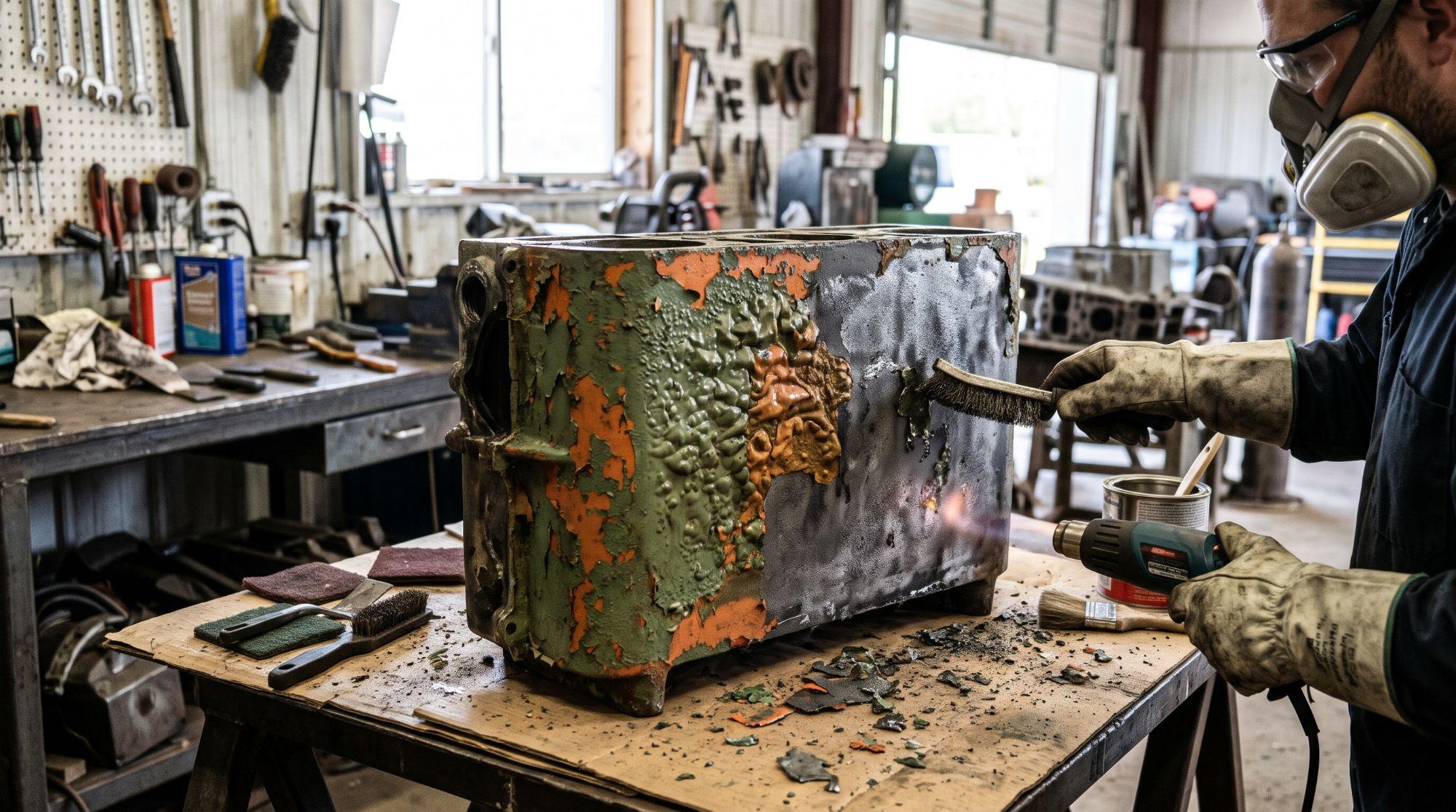
Chemical & thermal paint stripping in Pretoria
Non-destructive de-coating for alloy rims, delicate fabrications and multi-layer powder coated parts. Zero metal loss.
The trouble with grinding and torching
Faced with baked enamel, thick epoxy or an old powder coat, many contractors reach for a flap disc, a wire cup or a gas torch. The damage can't be undone:
- Gouging and thinning. Discs bite into the metal, leaving flat spots, thinning sheet and changing critical tolerances.
- Heat warping. Torching changes the grain structure of steel and aluminium, so panels warp, bow and lose their temper.
- Lost detail. Casting numbers, machined threads and ornamental detail get ground away.
Our approach: immersion stripping. Parts go into chemical de-coating baths that dissolve even the toughest coatings out of every crevice, leaving the metal untouched.
How we strip
- Chemical immersion. Parts are fully submerged in heated tanks that break down the coating. Old paint and powder swell, wrinkle and release.
- High-pressure rinse. Pressure washing flushes residue out of box tubing, bolt holes and blind recesses.
- Neutralise and inhibit. An alkaline neutralising bath removes chemical traces, then a rust-inhibiting rinse stops flash rust before blasting and coating.
What we strip regularly
- Alloy wheels and rims: OEM clear coats and old powder coats, without damaging the face or valve seat. See our wheel guide.
- Classic car parts: door handles, carburettor bodies, intake manifolds, brackets and steel dashboards.
- Production rework: fabrication batches with runs, assembly scratches or a colour change.
- Heritage gates and hardware: decades of oil paint off Victorian ironwork, brass fittings and steel grilles.
- Motorcycle and bicycle frames: factory urethane and clear coat off, down to bare welds.
Why not just blast it off?
Blasting is ideal for rust and mill scale, but blasting through thick powder coat is slow and expensive. The rubbery coat absorbs the abrasive, and the long blast time can heat and warp thin sheet.
So we strip first to dissolve the coating, then give the bare metal a quick, even sweep blast for the anchor profile. It costs you less, protects the part and gives a better finish.
Strip it clean without damaging the metal
Send photos of your coated items for availability and pricing.